The Challenges of Owning an Older Chicago Home

Chicago’s older homes don’t whisper their age. They announce it—in creaks, in radiators that hiss like annoyed cats, in basements that smell faintly of history and damp concrete. And nowhere is that age more assertive than in the plumbing.

In Lincoln Park, Lakeview, Old Town, Logan Square—neighborhoods built when horses still outnumbered cars—the pipes are not merely utilities. They are artifacts.

Installed by craftsmen who could not have imagined garbage disposals, whirlpool tubs, or three simultaneous showers running before work. These systems were designed for a slower, simpler domestic rhythm. Today, they’re asked to perform like modern athletes while wearing 19th-century boots.

Start with the drain lines. Many of these homes still rely on cast iron or, worse, clay sewer pipes. Cast iron corrodes from the inside out, quietly narrowing the pipe until one day gravity gives up and sewage decides your basement floor looks like a perfectly reasonable place to visit.

Clay tile, meanwhile, has an existential crisis every time a tree is planted nearby. Roots don’t see sewer lines as obstacles; they see them as opportunities. A hairline crack becomes a welcome mat, and soon your plumbing is sharing space with a maple’s entire extended family.

Then there’s the city itself. Chicago is flat. Famously, stubbornly flat. Which means gravity—the silent partner in every plumbing system—has less enthusiasm to work with. Drains must be pitched just right, or waste lingers longer than it should. In older homes, decades of settling can turn a once-perfect slope into a lazy shrug. Water hesitates. Solids hesitate longer. And hesitation, in plumbing, is never a virtue.

Water supply lines tell their own story. Galvanized steel was once the height of modern engineering. Today, it’s a liability wrapped in drywall. These pipes corrode internally, reducing water pressure until your morning shower feels more like a polite suggestion than a cleansing event. They also shed rust into the water itself, tinting it faintly orange and giving your plumbing fixtures the complexion of a chain smoker. Replacing them isn’t glamorous work. It’s surgical, invasive, and unavoidable.

And let’s talk about basements—because Chicago basements are not basements so much as negotiated truces with groundwater. Many older homes were built before modern flood-control standards existed. Heavy rain overwhelms aging sewer systems, and suddenly your floor drain becomes a fountain with deeply questionable taste. Backwater valves help, sump pumps save lives (or at least furniture), but retrofitting these solutions into century-old homes requires planning, patience, and a healthy respect for physics.

Even the fixtures themselves carry quirks. Old venting systems—sometimes undersized, sometimes creatively routed—can cause drains to gurgle like they’re trying to communicate. Toilets flush reluctantly. Traps dry out. Odors escape. The house isn’t haunted; it’s just vented like it’s still 1912.

Owning one of these homes is a little like dating someone with a rich past. There’s character, charm, undeniable beauty—and baggage. You don’t fix one thing without discovering three others that now feel inspired to speak up. Plumbing work in these houses isn’t about quick patches. It’s about respect for the structure, understanding how old systems think, and upgrading them without erasing their soul.

Because when it’s done right, the reward is profound. You get the grace of a vintage Chicago home—the brick, the woodwork, the sense that generations lived full lives here—paired with plumbing that doesn’t demand your attention at 2 a.m. during a thunderstorm.

In this city, that’s not just comfort. That’s luxury.

A Brewing Concern: What Milwaukee’s Record Flooding Tells Chicagoland Homeowners

flooded street after storm
A flooded city street after a short high-intensity storm

Last night, Milwaukee was struck by a record-shattering flash flood, with some areas receiving up to a foot of rain in a very short period. This intense downpour triggered widespread chaos—emergency declarations, numerous water rescues, power outages, submerged vehicles, and the closure of the Wisconsin State Fair. The Milwaukee Fire Department handled over 600 emergency calls overnight, from flooded basements to gas leaks and stranded drivers.

Why Chicago Homeowners Should Take Notice: The Rise of The Intense Hourly Storms

Chicago isn’t immune to this growing threat. The city is increasingly experiencing short, highly localized storms that can drop two inches or more of rain per hour—far beyond the capacity of the decades-old sewer systems .These intense downpours commonly lead to combined sewer backups that force water into basements and private drains.

A sobering example: In July 2023, Chicago endured a catastrophic flood where at least 70,000 basements were inundated due to persistent, heavy rainfall that overwhelmed sewer and reservoir systems.

More recently, the West Side was deluged by approximately 5 inches of rain in just 90 minutes, a reminder of how quickly these extreme events can arise—and the costly consequences they bring.

One analysis underscores the link: higher rainfall intensity correlates strongly with spikes in both street and basement flooding—an urgent signal for homeowners to act.

What Can You Do? Smart Steps to Protect Your Home

Here’s how Chicago homeowners can prepare:

  1. Schedule a Flood Risk Evaluation
    Bring in a certified flood control professional to assess vulnerabilities—like potential sewer backups, sump pump needs, or seal integrity. The Scottish Plumbers has technicians who specialize in flood control.
  2. Invest in Preventive Measures
  3. Have a Prepared Response Plan
    • Know how to shut off electricity and sewer lines safely.
    • Take photos of your basement and belongings now—for insurance purposes later.
    • Keep essential numbers handy (plumber, electrician, restoration service).
  4. Stay Informed During Storms
    • Monitor weather alerts—rain warnings aren’t just inconvenient; they’re a sign to ready your defenses.
    • If a storm is imminent, take quick action: deploy flood barriers, test your sump pump, or sandbag vulnerable entry points.

Don’t Wait for the Flood

Milwaukee’s flood was a stark warning: these flash, high-volume storms are no longer rare events—they’re the “new normal.” Chicago’s aging infrastructure and climate volatility mean that basement floods can happen fast—and with devastating effects.

By evaluating your home’s flood defenses, installing safeguards, and having a response plan, you can turn a potential disaster into manageable preparedness.

How Rats Invade Through Broken Sewer Pipes—And Why Pipe Stent Is the No-Dig Fix You Need

a photo of a brown rat
Brown Rat

When you hear scratching in your walls or see droppings in the basement, it’s easy to assume rats found their way in through a door left open or a crack in the foundation. But one of the most overlooked entry points into your home is below your feet—through broken or damaged sewer pipes.

Yes, rats can—and do—invade homes through the sewer system. If you have a compromised pipe underground, it could be acting as a hidden superhighway for pests, leading them straight into your home. Fortunately, with The Scottish Plumber’s Pipe Stent trenchless spot repair system, you can solve the problem without tearing up floors or digging up your yard.

🐀 The Rat Problem: How They Get In

Rats are clever, flexible, and always looking for food, warmth, and shelter. Sewer systems are an ideal environment for them—and if there’s a crack or break in your sewer line, they’ll use it. Once inside the pipe, they can follow it all the way into your walls or even up through your toilet (yes, really).

Here’s how it typically happens:

  • A section of sewer pipe under your home or yard becomes cracked or separated.
  • Rats smell food or warmth through the opening and enter the pipe.
  • With no barrier, they travel through the sewer line toward your home.
  • They emerge in basements, wall cavities, crawl spaces, or bathrooms.

🚨 The Dangers of Rats in Your Home

Having rats in your home isn’t just unsettling—it’s dangerous.

Health Risks:

  • Rats carry diseases like leptospirosis, hantavirus, and salmonella.
  • Their droppings and urine contaminate surfaces and air quality.
  • They can bring in fleas, ticks, and mites.

Property Damage:

  • Rats chew through wires, increasing fire risk.
  • They gnaw on wood, insulation, and even pipes.
  • Their nesting can destroy stored belongings or drywall.

In short, ignoring a rat problem—or the broken pipe that causes it—can lead to health hazards and costly damage.

🛠 Why You Need to Fix the Pipe, Not Just Block the Rats

Traps, poisons, and pest control services only treat the symptom. If your sewer pipe is broken, rats will keep coming. Sealing off entry points above ground helps, but unless the underground breach is fixed, you’re just delaying the inevitable.

A permanent solution starts with repairing the pipe itself.

Pipe Stent: The No-Dig Solution to Broken Sewer Pipes

At The Scottish Plumber, we specialize in Pipe Stent, a modern technique that lets us fix broken or cracked sections of pipe without excavation or demolition.

Here’s why Pipe Stent is the smart choice:

  • No digging. We access the pipe from existing cleanouts or manholes—no need to tear up floors or landscaping.
  • Minimal disruption. Most repairs are completed within a single day, so you can get back to normal fast.
  • Long-lasting. Our Pipe Stent technology reinforces the damaged area with a durable liner that seals the breach and prevents future problems.
  • Cost-effective. Avoiding demolition saves time and money—plus, we fix only the affected section, not the whole line.

🔍 How Pipe Patching Works

  1. Inspection: We use high-resolution cameras to locate the damaged section of pipe.
  2. Prep: The area is cleaned and prepared for patching.
  3. Install: A specialized liner coated with resin is inserted and expanded to press against the inside of the pipe.
  4. Cure: The resin hardens, forming a new pipe wall inside the old one—fully sealing cracks, holes, and separations.

Once complete, the patched section is smooth, seamless, and rat-proof.

🏠 Protect Your Home from Below

If you’ve noticed signs of rodent activity—or suspect an old or damaged sewer line—don’t wait for it to get worse. Let Pipe Stent eliminate the hidden access point and restore your peace of mind.

No digging. No mess. No more rats. Just solid, sealed, and secure pipes.

Ready to patch the problem?
Contact The Scottish Plumber today for a sewer inspection and see if Pipe Stent is the right solution for your home.

Don’t let rats sneak in through the pipes. Let Pipe Stent seal the way.

When Should a Homeowner Invest in a Flood Control System?

Flooding is a natural disaster that can cause significant damage to homes and properties, leading to costly repairs and emotional distress. As climate change continues to exacerbate weather patterns, the frequency and severity of floods are increasing.

Homeowners need to consider investing in flood control systems to protect their homes and assets.

But when is the right time to make this investment, and why is it crucial?

This article will explore the factors influencing this decision and the benefits of proactive flood management.

Assessing the Risk of Flooding

The first step in determining when to invest in a flood control system is to assess the risk of flooding in your area. Several factors can influence this risk:

  1. Geographic Location: Homes located in floodplains, near rivers or lakes, are at higher risk. Understanding your location’s flood history and potential is critical.
  2. Weather Patterns: Regions prone to heavy rainfall or snowmelt can experience frequent flooding. Monitoring weather patterns and changes in climate can provide insight into potential risks.
  3. Topography: The landscape around your home, including elevation and drainage patterns, can affect flood susceptibility. Low-lying areas or properties with poor drainage are more vulnerable.
  4. Urban Development: Increased urbanization can lead to reduced natural drainage, increasing flood risk. New construction and infrastructure changes can alter water flow, impacting your property.

Timing the Investment

Once the risk has been assessed, homeowners should consider the following scenarios for investing in a flood control system:

  1. After a Flood Event: Experiencing a flood firsthand often prompts immediate action. While this is a reactive approach, it underscores the importance of protection. Investing in flood control systems after a flood can prevent future incidents.
  2. Before Severe Weather Seasons: If your area is known for seasonal flooding, investing in a flood control system before the rainy or snowmelt season can provide peace of mind and physical protection.
  3. During Home Renovations or Purchases: If you are renovating your home or purchasing a new property, it is an ideal time to install flood control systems. Integrating these systems during renovation is often more cost-effective and less disruptive.
  4. Changes in Risk Assessment: Regularly updating your flood risk assessment based on new data or environmental changes can prompt timely investments. If new infrastructure or climate data indicates increased risk, it is prudent to act sooner rather than later.

Types of Flood Control Systems

Homeowners have a variety of flood control systems to choose from, depending on their specific needs and risks:

  1. Sump Pumps: The most basic protection. Sump pumps are installed in basements or crawl spaces to remove accumulated water and prevent flooding.
  2. French Drains: A trench filled with gravel or rock containing a perforated pipe that redirects surface water and groundwater away from your home.
  3. Backflow Valves: These valves prevent sewage from backing up into your home during heavy rains.
  4. Overhead Sewer Systems: The most effective flood control system of all:

overhead sewer conversion

An overhead sewer system prevents basement flooding by rerouting wastewater through pipes that are elevated above the basement level, thereby reducing the risk of backflow from the main sewer system. Here’s how it works:

  1. Installation of Overhead Sewer Pipes: The existing basement drain pipes are disconnected from the main sewer line. Instead, they are connected to a new overhead sewer pipe, which runs above the basement floor level, usually at or above the height of the first floor.
  2. Sump Pit and Pump: A sump pit is installed in the basement floor to collect wastewater from basement fixtures like sinks, toilets, and laundry machines. This pit contains a sump pump that lifts the wastewater up to the overhead sewer pipe.
  3. Gravity Flow: Once the wastewater is pumped up to the overhead sewer pipe, it flows by gravity out to the main sewer line. Since the main sewer line connection is now above the basement level, any backflow from the sewer system would have to rise to the level of the overhead sewer pipe, which is typically higher than any potential flood level.
  4. Check Valve: Some systems include a check valve in the overhead sewer line to provide an extra layer of protection against backflow.

By elevating the discharge point of the basement plumbing above the level of potential sewer backflow, an overhead sewer system effectively prevents basement flooding. This system is particularly useful in areas prone to heavy rainfall or where the municipal sewer system may become overwhelmed, causing backflow into lower-level drains and fixtures.

And as anyone who has been flooded by sewage water can attest, it’s not a situation any homeowner wants to find themselves in.

Benefits of Investing in Flood Control Systems

  1. Protection of Property: The primary benefit is safeguarding your home and belongings from water damage, which can be costly to repair.
  2. Insurance Savings: Many insurance companies offer lower premiums for homes equipped with flood control systems, reducing overall expenses.
  3. Increased Property Value: Homes with flood mitigation measures in place are more attractive to buyers, potentially increasing resale value.
  4. Peace of Mind: Knowing that your home is protected can reduce stress and anxiety during severe weather events.

Investing in a flood control system is a proactive measure that can save homeowners significant time, money, and stress.

Assessing your flood risk and timing your investment appropriately are crucial steps in protecting your property.

With the increasing unpredictability of weather patterns, being prepared is more important than ever. By understanding when and why to invest in flood control, homeowners can make informed decisions that safeguard their homes and enhance their quality of life.

How To Prevent Spring Home Flooding

Spring home flooding can occur due to heavy rainfall, snowmelt, or a combination of both. To prevent spring home flooding, here are some tips:

  1. Maintain your gutters and downspouts: Ensure that your gutters and downspouts are clear of debris and are directing water away from your home’s foundation. Make sure that the downspouts are positioned at least five feet away from the foundation.
  2. Install a sump pump: A sump pump can be installed in the basement or crawl space to pump water out of your home if it starts to flood. Make sure to test it regularly to ensure that it is working correctly.
  3. Elevate important items: If you have items in your basement or lower level that are important or valuable, consider elevating them off the floor to prevent water damage.
  4. Seal foundation cracks: Check your foundation for any cracks and seal them to prevent water from seeping in.
  5. Install backflow prevention valves: Install backflow prevention valves (or another type of flood control system) on all pipes that lead into your home to prevent sewage backup.
  6. Install flood sensors: Install flood sensors in areas of your home that are prone to flooding. These sensors can alert you when there is water present, giving you time to take action
  7. If you’re not sure about any of the items above and would like someone to inspect your home and ensure it is ready for spring, feel free to give us a call or fill out this appointment form and one of The Scottish Plumber’s friendly staff will give you a call to schedule a visit.

Trenchless Sewer Repair – Arlington Heights

Trenchless Sewer Repair is a process Arlington Heights homeowners should become familiar with. With many homes older than a century and lots of old pipes, most residents will at some point experience a problem with their sewer.

Trenchless Sewer Repair Saves Your Lawn

Sewer repair done using conventional methods can be quite messy. It often involves excavation which means either digging in the yard or breaking up the floor. Sometimes the sewer is buried under a deck or stoop, driveway, flower bed or bush – and all of these things have to be removed in order for the repair to proceed.

This is especially painful in a town like Arlington Heights where homeowners take a lot of pride in their outdoor landscapes. What’s worse, after the sewer has been repaired, the homeowner then has to deal with restoration. That’s where the Trenchless method comes in and saves the day.


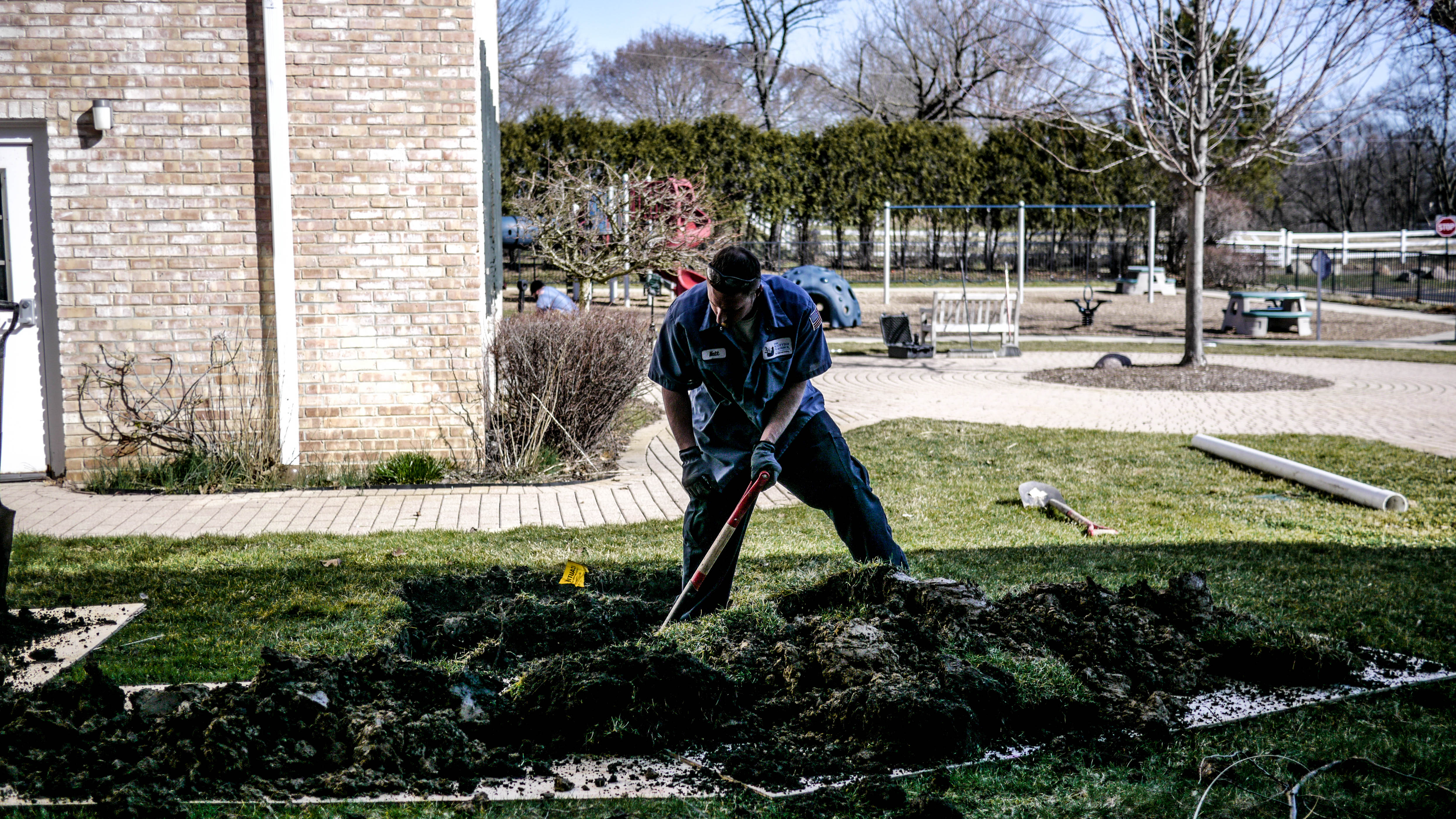
The Scottish Plumber digging broken sewerConventional sewer repair often requires excavation as you can see in the photo above. Restoring the lawn after the repair can be quite costly and time-consuming.


How Does Trenchless Sewer Repair Work?

There are two types of Trenchless Sewer Repair Arlington Heights customers can take advantage of:

  • Sewer Liner (also known as Trenchless Sewer Relining or Sewer Lining) – typically used to repair longer sections of pipe – usually 20 feet or longer. It can also be used in place of conventional sewer replacement.
  • Pipe Stent Trenchless Sewer Repair – typically used to repair shorter sections of pipe and for spot repairs.


With the Trenchless method, we’re able to install a new pipe inside of the damaged pipe using woven fiberglass, resins, and hardeners. This new pipe is not only stronger than any existing pipe (see video at bottom of page), but it is smooth and seamless to ensure proper flow.

Clay pipe, which is very common in old Arlington Heights sewer construction, is notorious for allowing roots to penetrate through the pipe connections, called joints. Trenchless Sewer Repair completely seals off any joints over which it’s installed and it is completely resistant to roots.

Watch the Pipe Stent Trenchless Repair process in this short video:


Trenchless Sewer Repair Saves You Money

Trenchless Sewer Repair is less expensive than conventional repair and that’s before you even take the costs of landscape restoration, stoop replacement, or deck repair into account. It also comes with a 50-year warranty, which is significantly longer than the typical warranty on conventional sewer repair or replacement.

The Scottish Plumber has some of the most experienced staff in the industry when it comes to Trenchless. We have done hundreds of such installations all over Chicagoland, many of them in Arlington Heights, so homeowners can rest easy that the job will be done quickly and properly by a trained and experienced professional.

In this short video, we test the strength of the Pipe Stent using a sledgehammer and some elbow grease.

For more information or to schedule a free estimate, use the red appointment form at the top of this page, give us a call, or contact us here.


Re-lining a Sewer in Chicago’s frigid temps

Sewer relining is a bit more challenging in the winter months but it can be done with the proper equipment, some pre-planning and experienced technicians.  Even though we were ready for the weather we ran into a few problems we did not foresee.  The pipes in the traveling boiler froze so we had to thaw them with a blow torch.  The project was definitely a success but we did double our labor costs due to the cold. The problem at this house was a root clogging the sewer line causing a back-up into the house.  After cleaning the roots outwe saw that the the pipe was broken allowing sewage to leak into the yard attracting more roots into the sewer line. This job was an emergency situation and we moved very quickly from diagnosing the problem to making the repair.

Preparing the soft liner for epoxy
Ryan preparing part of the re-lining equipment
Scottish Plumber
Inserting the soft liner through the clean-out in the front yard

Waiting for the soft pipe to cure takes about an hour and a half.

This Cured In Place Pipe (CIPP) is also known as Trenchless Sewer Repair because there is no digging involved.  Compared to the old fashioned excavation method this CIPP cost 1/2 as much and takes about a day and half to complete. This is considered a specialty among plumbers since this equipment is expensive and most won’t invest in it. It also takes special technicians with the technical training and a extensive background in the history of sewers since this CIPP is almost always performed on old complicated sewer systems.  Chicago has miles of aging sewers as do other cities and this technology is being used across the country by municipalities who now dont have to dig up roads to fix them.  The federal goverment has mandated that cities have to repair broken & craked municapall sewers because of the environmental impact it is having on local lakes, rivers and streams.

Yummy Scottish Sgoon

Sgoon is the Gaelic word for scones

making sgoonScones (from Gaelic word “sgoon”) are a favorite in Scotland and around the world

Ingredients

  • 1 3/4 cups all-purpose flour
  • 1/4 cup white sugar
  • 4 teaspoons baking powder                                                                                       
  • 1/8 teaspoon salt
  • 5 tablespoons unsalted butter
  • 1/2 cup dried currants of your choice
  • 1/2 cup milk
  • 1/4 cup sour cream
  • 1 egg
  • 1 tablespoon milk

Directions

  1. Preheat the oven to 400 degrees F (200 degrees C).
  2. Sift the flour, baking powder, sugar and salt into a large bowl. Cut in butter using a pastry cutter until it is in pea sized lumps. Stir in the currants. Mix together 1/2 cup milk and sour cream in a measuring cup. Pour all at once into the dry ingredients, and stir gently until well blended. DO NOT OVERWORK THE DOUGH
  3. With floured hands, pat scone dough into balls 2 to 3 inches across, depending on what size you want. Place onto a greased baking sheet, and flatten lightly. Let the scones barely touch each other. Whisk together egg and 1 T of milk. Brush the tops of the scones with the egg wash. Let them rest for 10 minutes.
  4. Bake for 10 to 15 minutes in the preheated oven, until the tops are golden brown, not deep brown. Break each scone apart, or slice in half. Serve with butter or clotted cream and a selection of jams – or even plain.

Yields aporoximately 8 scones

Christmas Scones


Scottish Christmas Scones

These tender/crumbly, full-flavored scones feature cranberries and pecans. With oats in the dough, they’re a tasty throwback to their Scottish origins.


2 cups (8 1/2 ounces) King Arthur Unbleached All-Purpose Flour
1 cup (3 ounces) old-fashioned rolled oats or quick-cooking (not instant) oats
1 tablespoon baking powder
1/2 teaspoon baking soda
3/4 teaspoon salt
1/2 cup (3 3/4 ounces) brown sugar, packed
1/2 cup (4 ounces, 1 stick) butter
1 cup (4 ounces) dried cranberries
1 cup (4 ouces) diced pecans
1 cup (8 ounces) buttermilk, sour cream, or plain yogurt
coarse sparkling sugar for topping, optional

Preheat your oven to 375°F. Lightly grease a baking sheet, or line with parchment.
Mix the dry ingredients in a large mixing bowl. Mix the butter into the dry ingredients until it looks unevenly crumbly. Mix in the fruit and nuts until they’re evenly distributed. Stir in the buttermilk.

Turn the dough out onto a well-floured surface and cut it into two pieces. (Keep sprinkling on flour if you need to.) Form each into a disk, and gently pat each disk into a round about 6″ in diameter. Sprinkle each disk with coarse sparkling sugar, if desired. With a bench scraper or sharp knife, cut the round into 8 wedges. Do this by cutting straight down through the dough so you shear the edges. If you saw the dough, you tend to press the edges together, which keeps the scones from rising as they bake. Don’t separate the wedges.

Transfer the scones, still in their circular shape, the the prepared baking sheet. Separate the scones slightly; there should be about 1″ between them at the outside edge. Bake the scones for 20 minutes, or until they’re just beginning to brown. Remove them from the oven, and serve warm. Or reheat for 10 minutes, lightly tented with foil, in a preheated 350°F oven. Serve with traditional clotted cream or Devon cream, if desired. Yield: 16 tea scones.


This recipe reprinted from The Baking Sheet Newsletter, Vol. III, No. 2, December 1991 issue. http://www.kingarthurflour.com/recipes/christmas-scones-recipe

Lemon Scones with Lemon Glaze

Serves/Makes:   16

Ingredients:
4 cups all-purpose flour
2 tablespoons baking powder
1/4 cup granulated sugar
1/4 teaspoon salt
3 tablespoons grated lemon peel
1/2 cup butter (cut into 1/2-inch pieces)
2 eggs, beaten
2/3 cup milk
1 cup dried cranberries are a nice addition to this recipe

Directions:
Preheat oven to 450degrees F. Grease and flour baking sheet.
Sift flour, sugar and salt in bowl. Stir in peel. Cut in butter until mixture resembles coarse meal. Blend in eggs and just enough milk to form soft but not sticky dough. Turn dough out onto lightly floured surface. Gently roll or pat dough to about 1/2-inch thickness, lightly flouring as necessary to prevent sticking.
Cut out rounds using 2-inch floured biscuit cutter. Set 1/2-inch apart on prepared baking sheets. Brush with cream or milk for a rich sheen. Bake until scones are golden brown, 12 to 15 minutes.

Lemon Glaze -After baking add glaze as desired
In small bowl: add 1 cup powdered sugar and lemon juice to desired consistency.  Drizzle over lightly cooled scones.

Call Now