&nbsp

Why Every Lincoln Park Basement Needs a Battery-Backup Sump Pump

A battery-backup sump pump matters more in Lincoln Park than in most suburbs for one specific reason: the same severe storms that trigger sump pump activation are also the storms most likely to knock out power — which is exactly when a standard AC-only pump goes silent and your basement floods anyway.

The power-outage problem

Standard sump pumps run on household AC power. During the kind of heavy storm that causes groundwater to rise fast enough to need the pump, that same storm is a common cause of local power outages. A pump with no backup power simply stops working at the worst possible moment — often overnight, when nobody’s watching the basement.

Why this is a bigger deal in older Lincoln Park homes

Many Lincoln Park basements have been finished or partially converted into livable space — rec rooms, guest suites, laundry areas with real flooring and drywall. A pump failure in an unfinished basement means a wet floor. In a finished one, it means replacing flooring, drywall, and possibly furniture.

What a battery-backup system actually adds

A battery-backup sump pump system keeps a second pump running on a charged battery when AC power fails, buying hours of protection during the exact conditions when you need it most. Pairing this with a flood control system — whether that’s a Tramco system, a double check valve system, or overhead sewer conversion — covers both groundwater seepage and sewer surcharge, the two separate flooding risks Lincoln Park basements face.

Frequently Asked Questions

How long does a battery backup sump pump last during an outage?

Typically 4–10 hours depending on battery capacity and how frequently the pump cycles, which depends on how much water is coming in. We size the battery to your basement’s actual water volume during a consultation.

Do I need both a sump pump and a flood control system?

If your home has experienced flooding from both groundwater seepage and sewer backup, yes — they solve different problems and one doesn’t substitute for the other.

How often should a sump pump be tested?

At minimum twice a year, ideally before spring rains and again in fall. A quick test involves pouring water into the pit to confirm the pump activates and drains properly.

Call 888-MAC-CLOG to schedule a sump pump consultation, or use this quick appointment form.
Water Heater Replacement in Lincoln Park’s Vintage Buildings: What Makes It Different

Water heater replacement in Lincoln Park usually comes down to one constraint: space. Vintage greystones, courtyard buildings, and converted two-flats were built long before 50-gallon tanks were standard equipment, and utility closets, low-ceiling basements, and narrow stairwells all shape what’s actually installable.

The space problem, specifically

Many Lincoln Park basements have low ceiling clearance and narrow access points that make maneuvering a standard tank difficult, let alone a code-compliant install with proper venting clearance. Narrow interior stairwells common in courtyard buildings can also rule out certain tank sizes entirely.

Where tankless makes sense

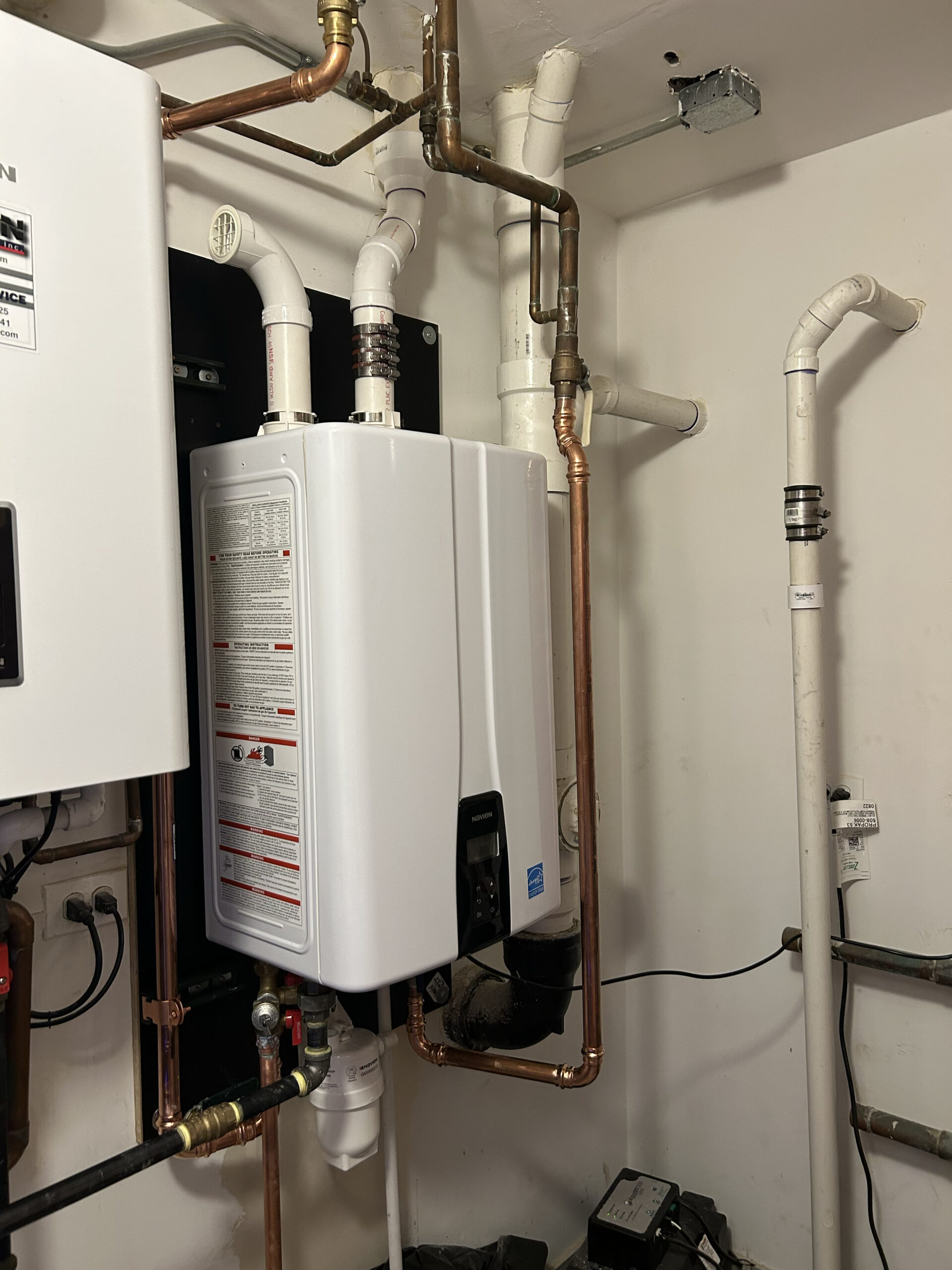
A tankless water heater solves the space problem directly — wall-mounted, no floor footprint, and no tank to maneuver down a tight stairwell. It’s a natural fit for the smaller utility spaces common in Lincoln Park’s older housing stock, though venting requirements still need to be assessed per building, particularly in multi-unit courtyard buildings sharing a chase.

A photo of a tankless water heater installed on the wall of a home.
A tankless water heater installed by one of our friendly technicians.

What we check before quoting a replacement

  • Existing gas line sizing — older buildings sometimes need upsizing for a tankless unit’s higher BTU demand
  • Venting path and clearance to combustible materials
  • Whether your building falls under any condo/co-op association approval requirements for mechanical changes
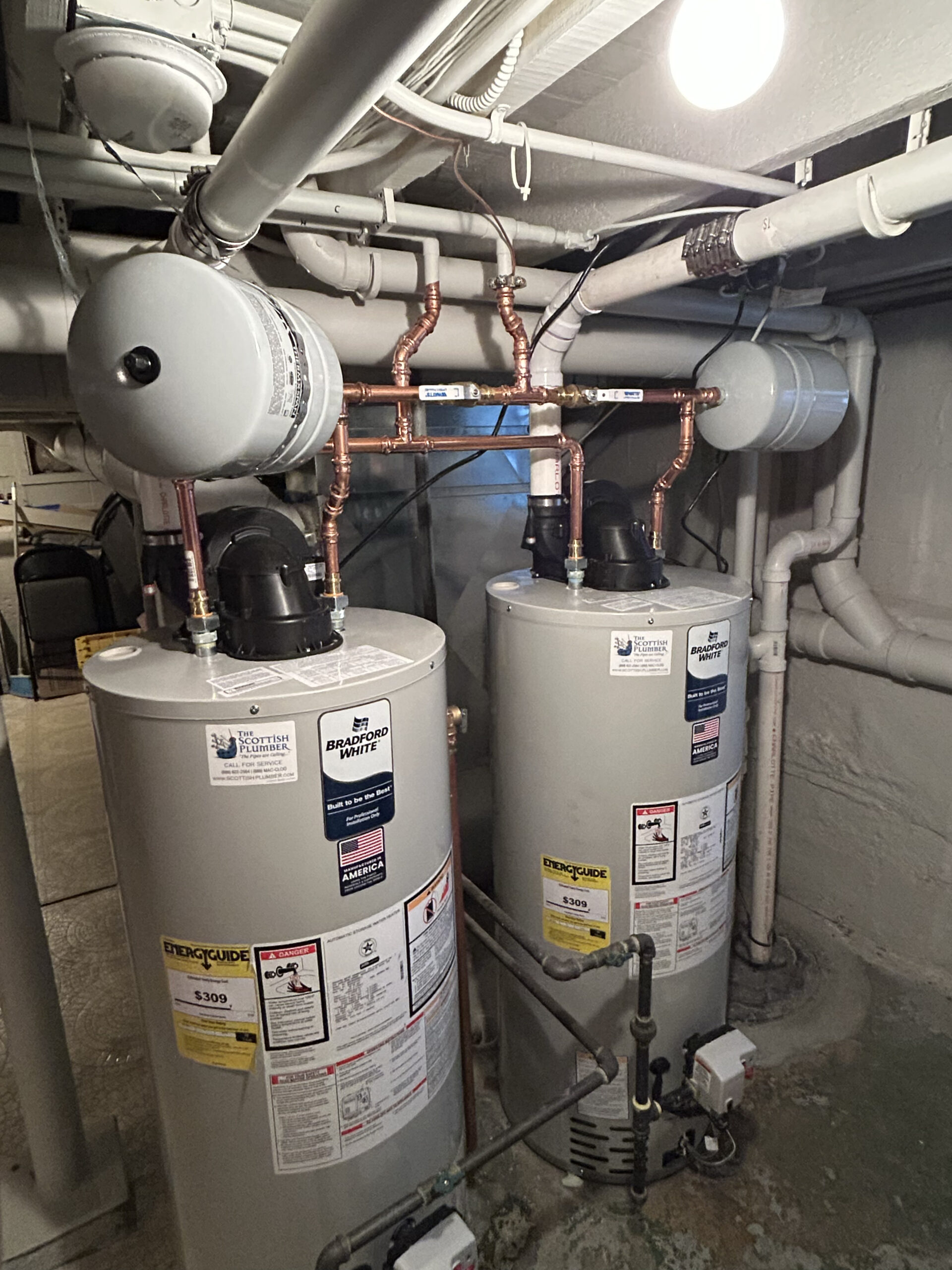
Two standard water heaters installed in tandem with a storage tank on top and all of the necessary piping connecting it to water and gas.
Two standard tank water heaters installed in tandem.

Frequently Asked Questions

Is tankless worth it for a smaller Lincoln Park condo or two-flat unit?

Often, yes — the space savings alone are significant in tight utility areas, and tankless units provide continuous hot water without a tank’s standby heat loss. Sizing depends on your unit’s actual hot water demand.

How long does a standard tank water heater last?

Typically 8–12 years, though older units in hard water conditions can fail sooner. If yours is over a decade old, replacement is worth planning proactively rather than waiting for failure.

Call 888-MAC-CLOG for a water heater consultation, or schedule an appointment here.

Why Lincoln Park Basements Flood During Heavy Storms (It’s Not Just Rain)

Lincoln Park basements flood during heavy storms largely because of Chicago’s combined sewer system, which carries both stormwater and sewage in the same pipes. When a storm overwhelms the system’s capacity, the pressure creates a back-up — and the lowest point in that system is often your basement floor drain.

The combined sewer system, briefly explained

Most older Chicago neighborhoods, Lincoln Park included, were built on a combined sewer system rather than separate stormwater and sanitary lines. During a heavy rain event, stormwater runoff and sewage share the same pipe capacity. When that capacity is exceeded, the path of least resistance for excess water is often back up through household drains — particularly basement floor drains, which sit at the system’s lowest accessible point.

Why this hits Lincoln Park specifically

Dense, largely paved lot coverage in Lincoln Park means less soil to absorb rainfall compared to newer, less dense suburbs. Combined with aging infrastructure and finished basements that were rarely designed with backup flooding in mind, the neighborhood sees this pattern more than most.

What actually prevents it

The Scottish Plumber installs three main flood control options, and the right one depends on your property and budget:

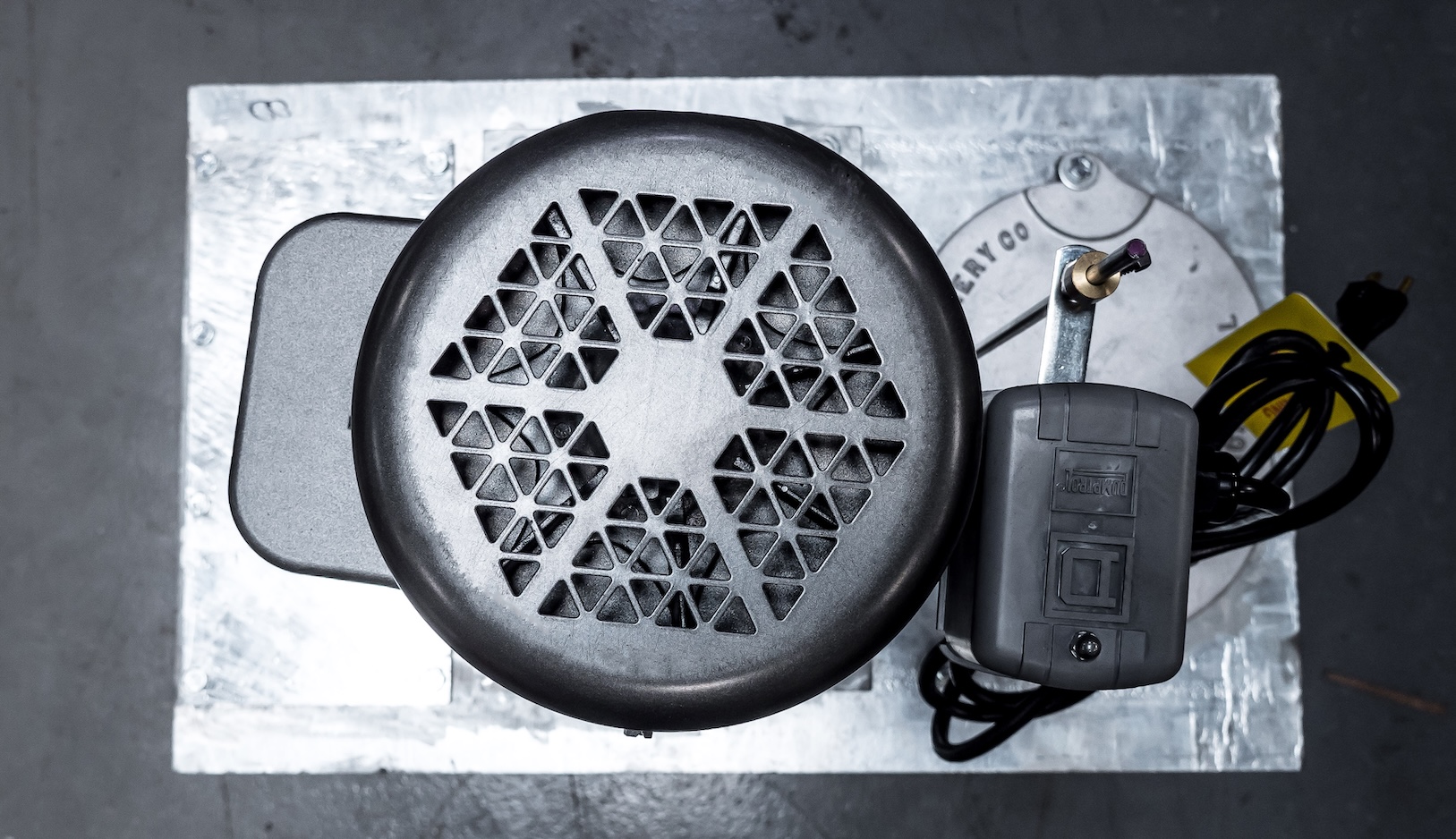
  • Tramco flood control systems — manufactured in Chicago since the 1950s, installed inside or outside the home, with a heavy-duty pump in an aluminum encasement and a system of check valves. Comes with a 10-year parts and labor warranty.

    A photo of the Tramco 960 Flood Control System seen from overhead.
    The Tramco 960 Flood Control System seen from overhead.
  • Double check valve flood control systems — installed outside, typically in the front yard, using a concrete vault with an ejector pump and check valves

    that block backflow during a surcharge and drain the vault out once pressure recedes.

    A drawing of how a double-check valve flood control system works showing a house and it's sewer pipes connecting to a vault in the front yard and out to the street.
    How a double-check valve flood control system works.
  • Overhead sewer conversion — raises your sewer pipe above ground level at the house so even a pressurized city sewer can’t reach it, with basement plumbing rerouted through an ejector pump.

    A drawing of an overhead sewer conversion.
    How an overhead sewer conversion works.


Frequently Asked Questions

What kind of flood control system do I need?

It depends on your property. A Tramco system works inside or outside the home with a 10-year warranty; a double check valve system installs outside in a front-yard vault; overhead sewer conversion is the most thorough fix, raising your sewer pipe above ground level entirely. We assess your basement and sewer line during a free consultation to recommend the right fit.

Will a sump pump alone stop sewer backup flooding?

No. A sump pump manages groundwater and foundation seepage; it does nothing to stop sewage surcharge coming up through a floor drain. That requires a flood control system like the ones above.

Call 888-MAC-CLOG to evaluate your basement’s flood risk, or schedule an appointment here.

Broken Sewer Line vs. Clogged Sewer Line: What Lincoln Park Homeowners Need to Know

A broken sewer line is structural — the pipe itself has collapsed, cracked, or separated at a joint. That’s a different problem than a clog, and no amount of rodding will fix it. In Lincoln Park, where much of the sewer infrastructure under the street and the parkway dates back 80–100 years, structural failure is common enough that it’s worth knowing the difference before you call for service.

How a broken line is different from a clog

A clog is a blockage inside an otherwise intact pipe. A break means the pipe’s structure has failed — often from ground shifting, old clay degrading, or a previous root intrusion that was rodded out repeatedly without ever repairing the joint it was growing through. Rodding a broken line usually gives you a few days of relief before the same backup returns, because the tool is clearing debris, not fixing a structural gap.

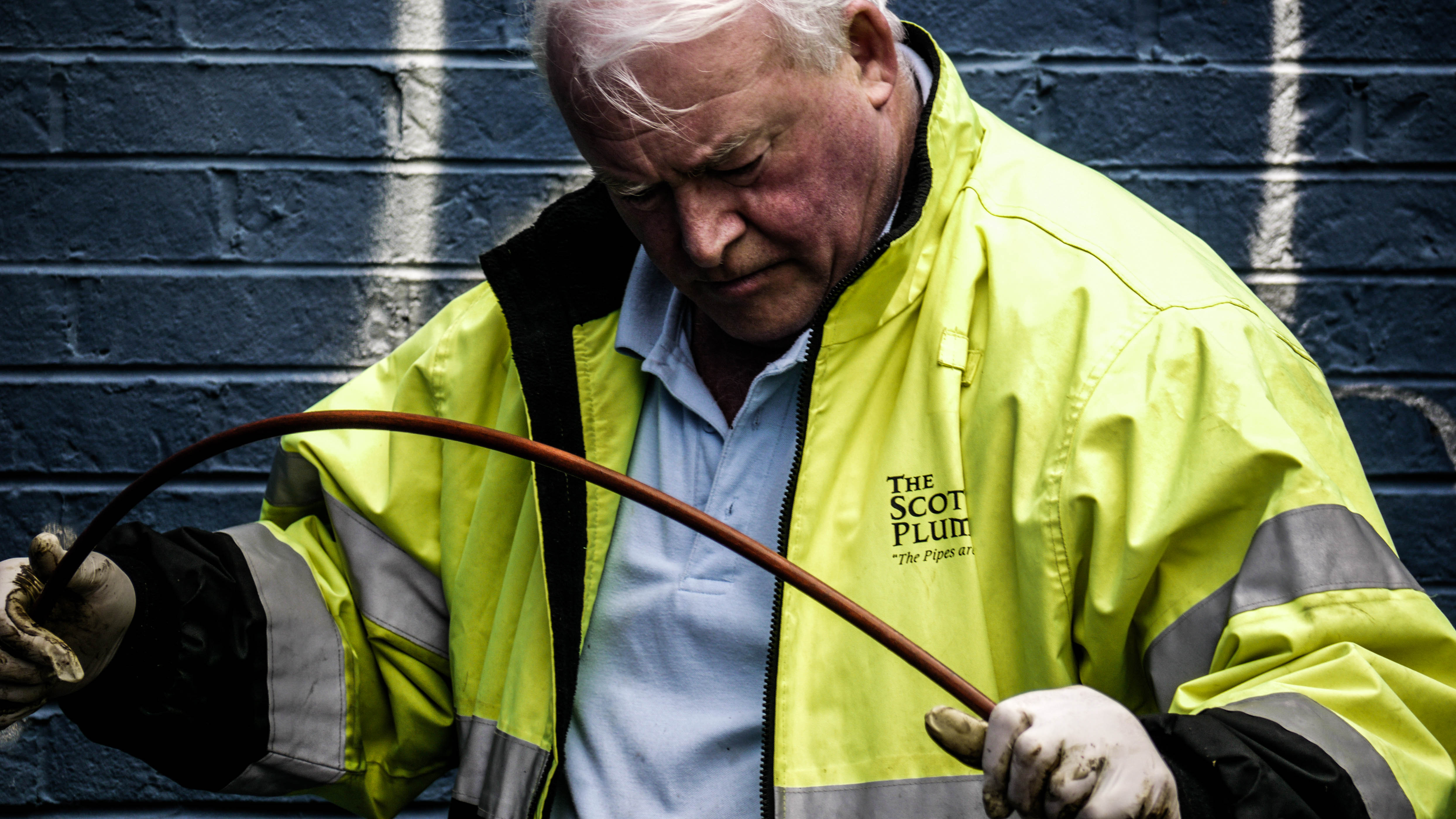
The Scottish Plumber inspects a sewer for cracks
The Scottish Plumber performs a sewer video inspection.

Signs you’re dealing with a break, not a clog

  • Backups that return within days of rodding, even after a clean pass
  • Sinkholes or soft, sunken spots in the yard or parkway above the pipe route
  • Sewage smell that lingers outdoors, not just indoors
  • A sewer camera inspection showing a visible gap, offset joint, or collapsed section

What repair actually looks like

Most Lincoln Park repairs don’t require excavating the entire yard. Depending on the location and severity of the break, our team evaluates trenchless pipe lining or Pipe Stent before recommending a full dig — both preserve mature landscaping and avoid tearing up parkway trees the city has jurisdiction over. We always start with a camera inspection so you see the exact damage before we quote a repair method.

Frequently Asked Questions

Can a broken sewer line be fixed without digging up my yard?

Often, yes. Trenchless methods like pipe lining or bursting repair the line through existing access points in many cases. Severity and pipe location determine whether trenchless is viable.

How do I know if it’s a break and not just a stubborn clog?

The clearest signal is recurrence: if rodding clears the blockage but backups return within a few days, a camera inspection is the next step to check for structural damage.

Who is responsible for repairing a broken sewer line in Lincoln Park — me or the city?

The homeowner is generally responsible for the sewer pipe from the house to the property line or the city main connection point. We can help identify where your responsibility ends during the camera inspection.

Call 888-MAC-CLOG to schedule a camera inspection, or visit our contact page.

Clogged Sewer Line in Lincoln Park? Here’s What’s Actually Happening Under Your Street

A clogged sewer line in Lincoln Park is, more often than not, a tree problem wearing a plumbing disguise. The parkway elms and honey locusts that make the neighborhood’s streets so handsome send roots straight toward the nearest source of water and nutrients — which is usually your century-old clay sewer pipe.

Why Lincoln Park sewers clog more than most

Lincoln Park’s housing stock — vintage greystones, courtyard buildings, pre-1950s two-flats — was largely built with clay tile sewer piping. Clay pipe joints aren’t sealed the way modern PVC is, which gives tree roots an open invitation. Combine that with mature parkway trees planted close to the property line, and root intrusion becomes less a possibility than an inevitability.

Signs your sewer line is clogged, not just slow

  • Multiple drains backing up at once (not just one sink or tub)
  • Gurgling from the floor drain when you run the washing machine
  • Sewage odor in the basement or alley-side of the property
  • Water backing up into the lowest drain in the house first

If it’s just one fixture, that’s a local clog. If it’s several fixtures at once, the problem is downstream — in the main line, likely past the property line and toward the city connection.

What we do about it

Our sewer rodding service starts at $99 and clears the immediate clog. For root intrusion specifically, we follow up with a camera inspection to show you exactly where the roots are and how bad the pipe damage is — because rodding removes the roots but doesn’t fix a compromised clay joint. If the pipe itself is cracked, our sewer line repair team can talk you through trenchless options that don’t require tearing up your parkway.

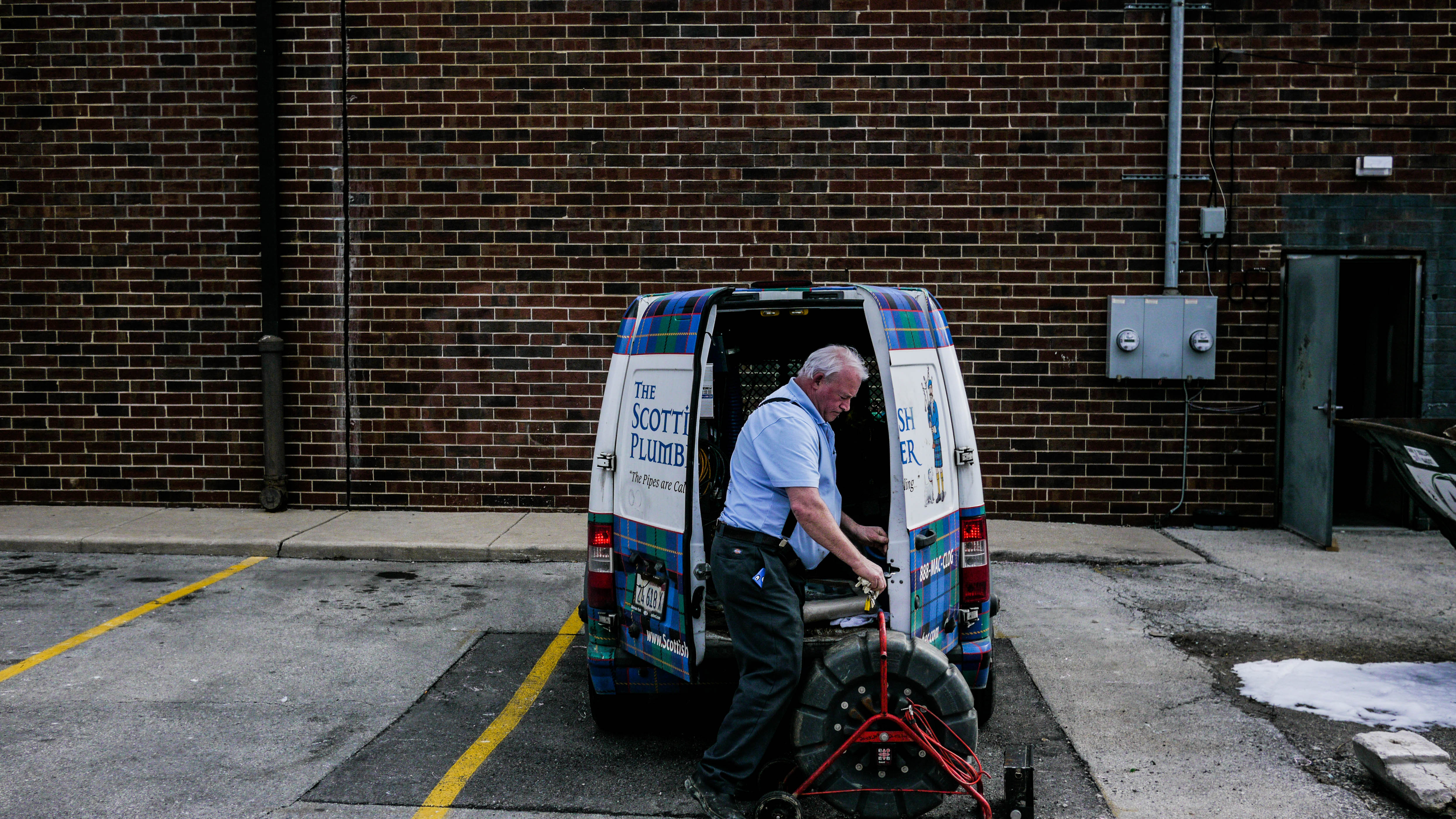
The Scottish Plumber rolls out a sewer camera

Frequently Asked Questions

How much does sewer rodding cost in Lincoln Park?

Our standard sewer rodding service starts at $99. Final pricing depends on  pipe accessibility (cleanout or not), which we confirm on-site before any work begins, and on whether you just want to restore flow to the sewer, or perform a thorough cleaning of the sewer pipe.

Restoring flow through an outside cleanout is $99 up to 100 feet of rodding. And if we’re unable to restore flow, we don’t charge.

Will tree roots come back after rodding?

Yes, usually within 12–18 months if the underlying pipe joint isn’t sealed or repaired. Rodding clears the immediate blockage; it doesn’t stop future regrowth on its own.

Do I need a permit to repair a sewer line in Lincoln Park?

Yes. The City of Chicago requires a permit for sewer pipe repair or replacement. We handle the permitting process as part of any repair job.

Call 888-MAC-CLOG for same-day diagnostics, or reach out through our contact page.

Call Now