
Battery Backup Sump Pumps: What North Shore Homeowners Need to Know Before the Next Storm
Here is the problem with sump pumps in a heavy storm: the moment you need one most is exactly when the power is most likely to go out. A thunderstorm that drops two inches of rain in an hour will overwhelm surface drainage, saturate the soil, and send water toward every basement on the block — and it may also take the power with it, leaving your primary sump pump as useful as a bucket.
A battery backup sump pump exists to handle exactly this scenario. It monitors water level in the pit independently of the primary pump, activates when water rises, and runs entirely on a dedicated battery system. When the power is on, the primary pump handles the load and the battery stays charged. When the power is off, the backup takes over.
How Battery Backup Systems Work
Most battery backup sump pump systems consist of a separate pump installed in the same pit as the primary pump, connected to its own discharge line (which typically tees into the primary discharge) and powered by a 12-volt deep-cycle marine or AGM battery. A charging unit keeps the battery at full capacity during normal operation.
When water in the pit rises above the backup pump’s float switch — whether because the primary pump has failed, been overwhelmed, or lost power — the backup activates automatically. Better systems include an alarm that alerts you when the backup is running, which is important because it means something has already gone wrong with the primary system.
What to Look for in a Backup System
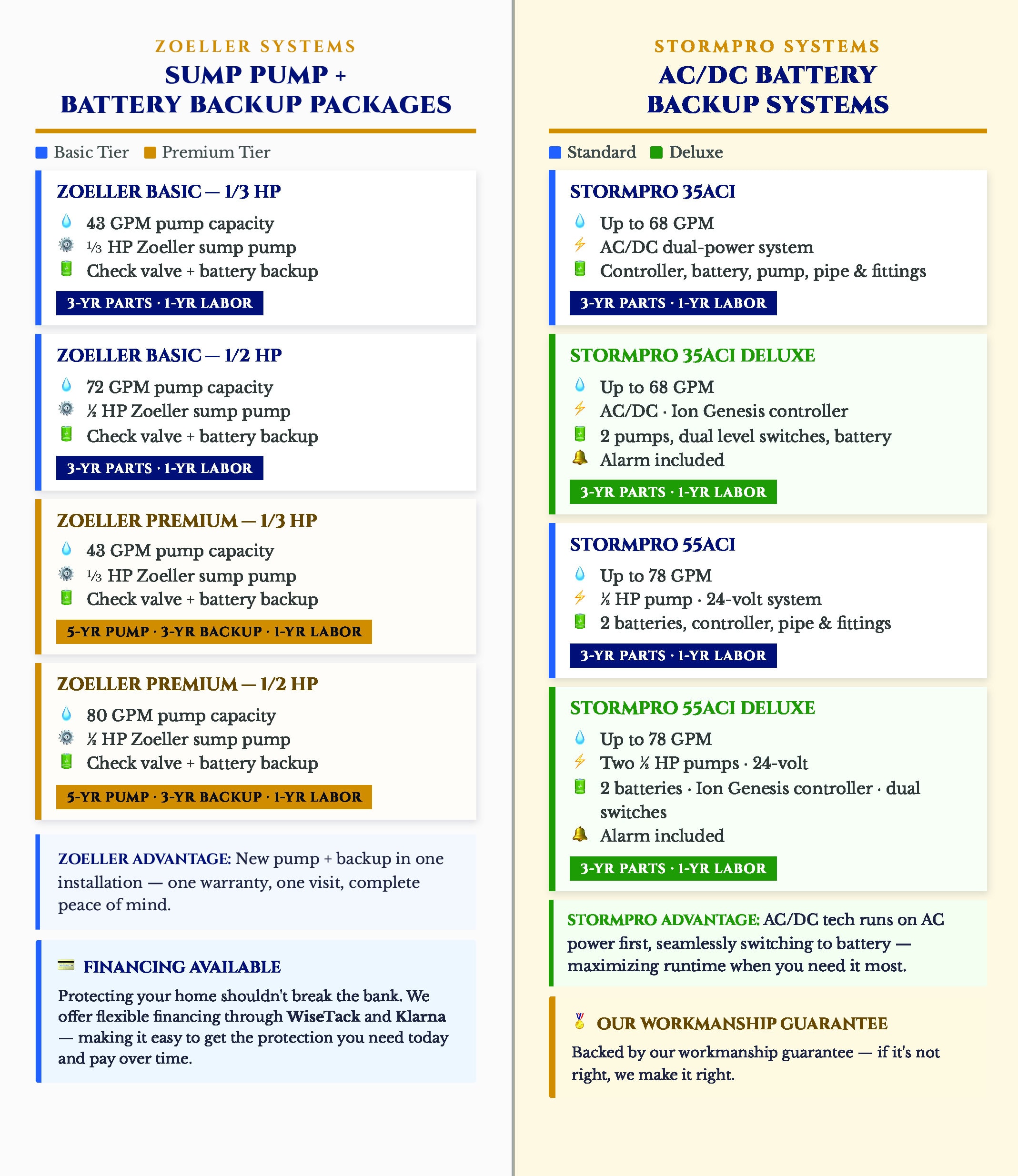
Battery type. Standard lead-acid batteries are the least expensive option and perform adequately. AGM (absorbed glass mat) batteries are maintenance-free, charge faster, and perform better in extreme temperatures — which matters in a Chicago winter when power outages often coincide with cold. Lithium battery systems are now available and offer longer life and more consistent performance, but at a significantly higher cost.
Pumping capacity. A backup pump that moves 1,000 gallons per hour sounds impressive until you realize your primary pump moves 3,000. Match the backup capacity to your home’s actual needs — a large, deep basement in a high-water-table area needs more backup capacity than a shallow crawl space.
Battery runtime. Manufacturers advertise runtime figures under ideal conditions. Real-world runtime depends on how hard the pump is working. A system rated for “ten hours” may deliver two hours of heavy pumping if your pit is filling quickly. Look for systems with larger battery banks, or consider a dual-battery setup if your basement is particularly vulnerable.
Monitoring and alerts. Modern systems from brands like Zoeller and StormPro include audible and visual alarms, and some connect to Wi-Fi for remote notification. Given that flooded basements typically happen at 2 a.m. during storms, the alert feature is not a luxury.
Installation Considerations
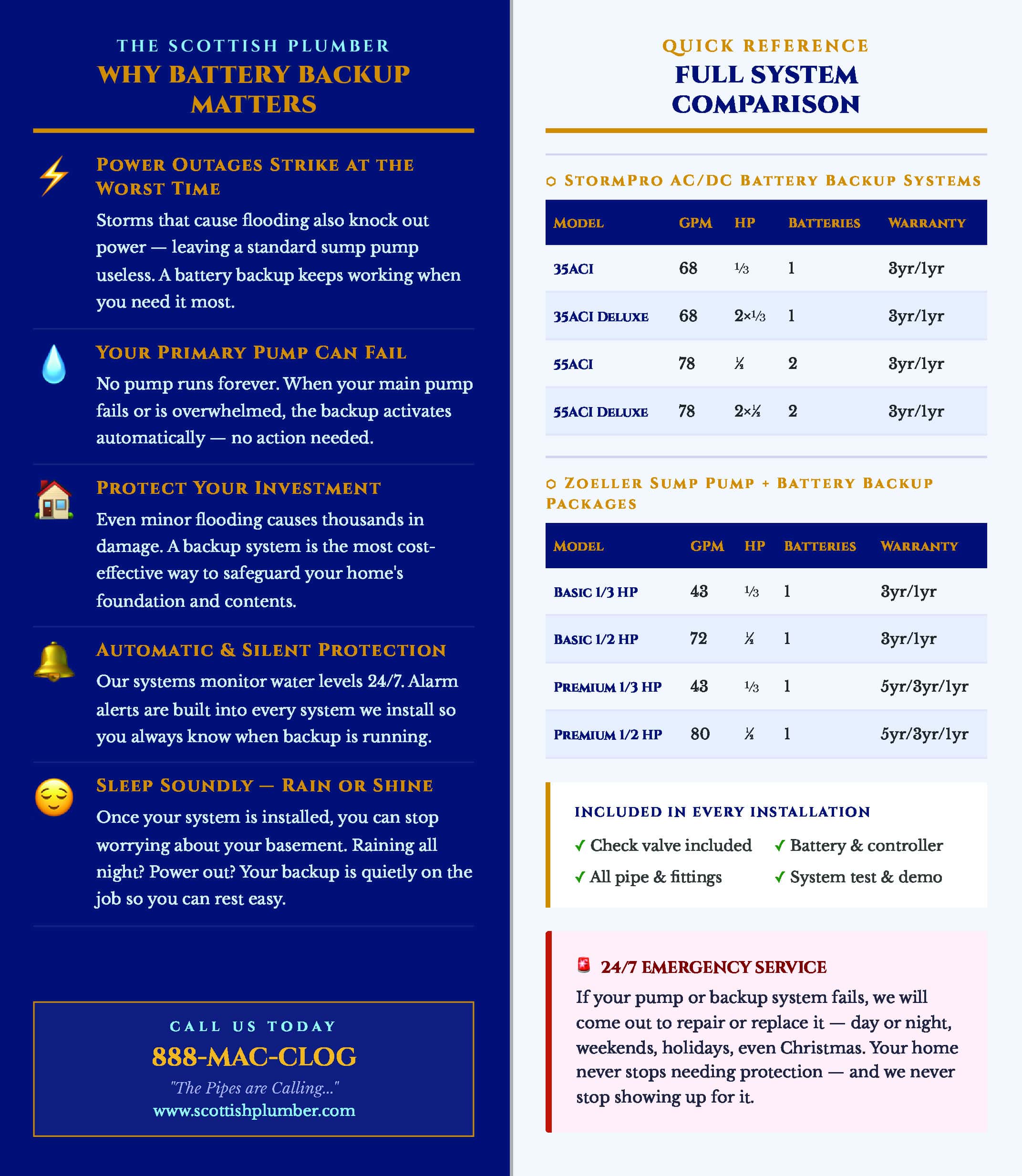
A battery backup system is not a DIY project for most homeowners. The pump installation itself is manageable, but proper discharge line routing, float switch positioning, and ensuring the backup doesn’t conflict with the primary pump’s float switch all require careful work. An improperly installed backup pump can short-cycle, fail to activate at the right water level, or discharge water back into the pit.
The battery also needs to be accessible for periodic testing and eventual replacement (typically every three to five years for AGM, sooner for standard lead-acid) and positioned where it won’t be damaged by minor water intrusion.
We install and service battery backup sump systems across the North Shore. If you’ve been meaning to add one before next season, now is the right time — not during a storm warning.